
Make the client experience visible.
Therapy is shaped not only by what takes place in session, but also by how clients experience the therapeutic process itself.
Anesi helps clients share that experience and helps therapists see it, session by session, creating opportunities for earlier discussion, stronger alignment, and a more complete clinical picture.
Therapy involves two experiences, not one.
Therapists and clients are participating in therapy together, but they do not always experience it in the same way.
These perspectives often overlap, but can differ in important ways. Anesi helps make the client's experience more visible, creating opportunities for earlier discussion, stronger alignment, and a more complete understanding of the therapeutic process.
The therapist’s view
- Clinical observation and assessment
- What the client chooses to share in session
- The therapist’s felt sense of how things are going
The client’s experience
- What they hoped therapy would be like
- How they are actually experiencing it
- What they wanted to say — but did not
Anesi bridges the gap
A structured, session-by-session view of the client’s experience — visible to the therapist before the next session begins.
A clearer view of how therapy is being experienced.
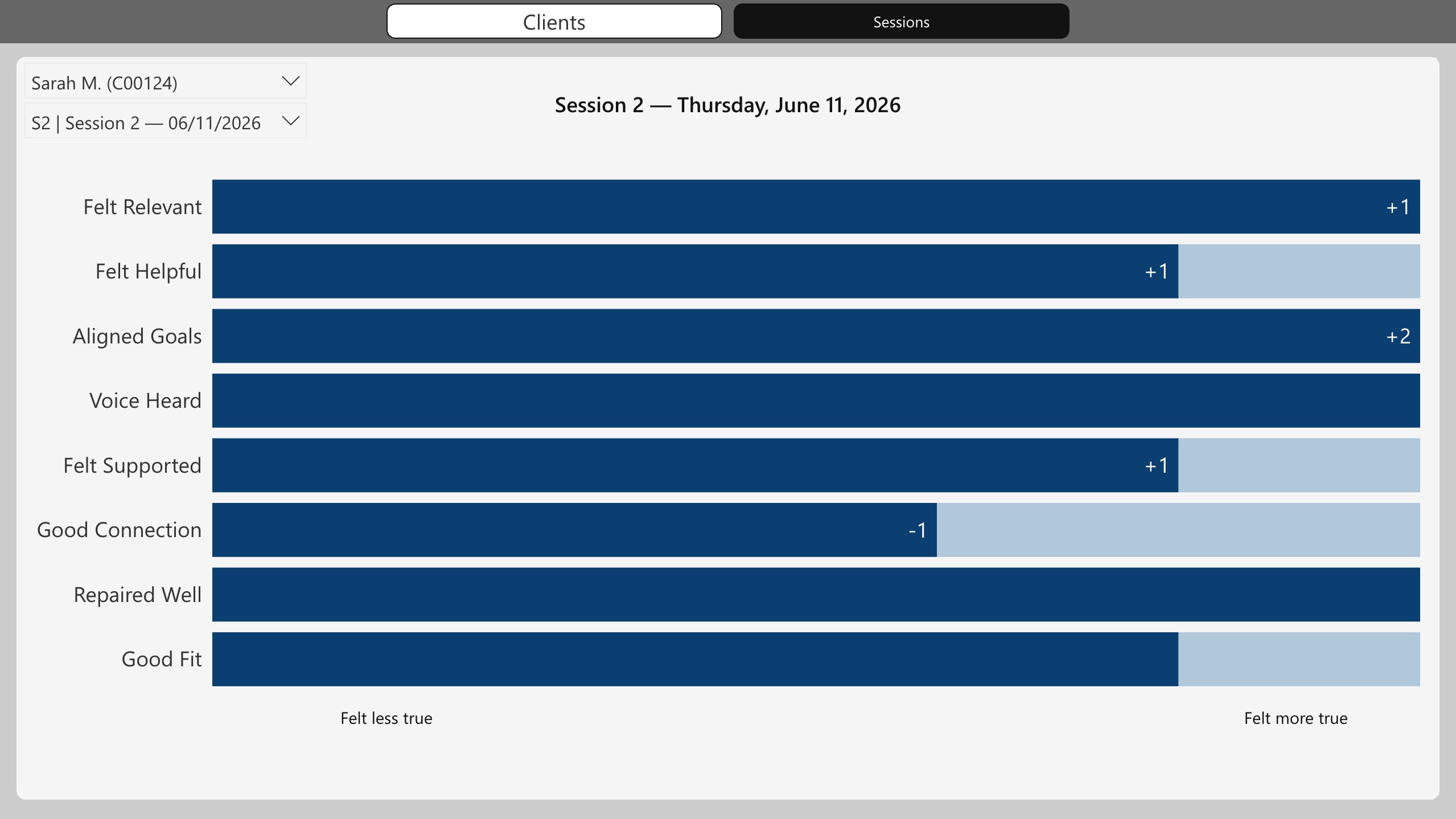
Clients complete brief questionnaires before therapy begins and after early sessions. Anesi brings those responses together in a simple dashboard — helping therapists see patterns, changes, strengths, and concerns that may otherwise remain difficult to identify.
Client Perspective
Clients share how they are experiencing therapy through brief questionnaires completed outside of session.
Session-by-Session Visibility
Therapists can see how client responses change and evolve across early sessions.
Quick Clinical Review
Responses, changes, and trends are organized in one place for quick review before the next session.
Important parts of the client’s experience often remain unspoken.
Clients enter therapy with expectations, hopes, goals, preferences, and assumptions about what therapy will be like.
As therapy unfolds, clients may experience uncertainty, unmet expectations, dissatisfaction, alliance concerns, or questions about whether therapy is helping. These experiences can influence engagement, but they are often only partially visible to the client and largely invisible to the therapist.
Therapists can only work with what they are able to see and what is shared. When important aspects of the client’s experience remain hidden, opportunities for discussion, alignment, and intervention may be missed.
More visibility means more opportunities to respond.
Anesi provides therapists with additional information about how clients are experiencing therapy. Therapists can consider that information alongside clinical observation, experience, and professional judgment when deciding what deserves attention.
Earlier Visibility
Notice what may be supporting engagement or creating friction before it becomes obvious in the client’s behavior.
Stronger Alignment
Create openings to discuss expectations, goals, fit, progress, and whether therapy feels helpful.
A More Complete Clinical Picture
Add another meaningful source of information to the clinical picture.
What might your clients be experiencing that you cannot currently see?
Every therapist works hard to understand their clients. Anesi helps make parts of the client’s experience more visible, creating opportunities for earlier discussion, stronger alignment, and a more complete clinical picture.